
Could Brainrot Improve Studying?
1:1 AI-powered learning is revolutionizing education – but we risk losing something else.

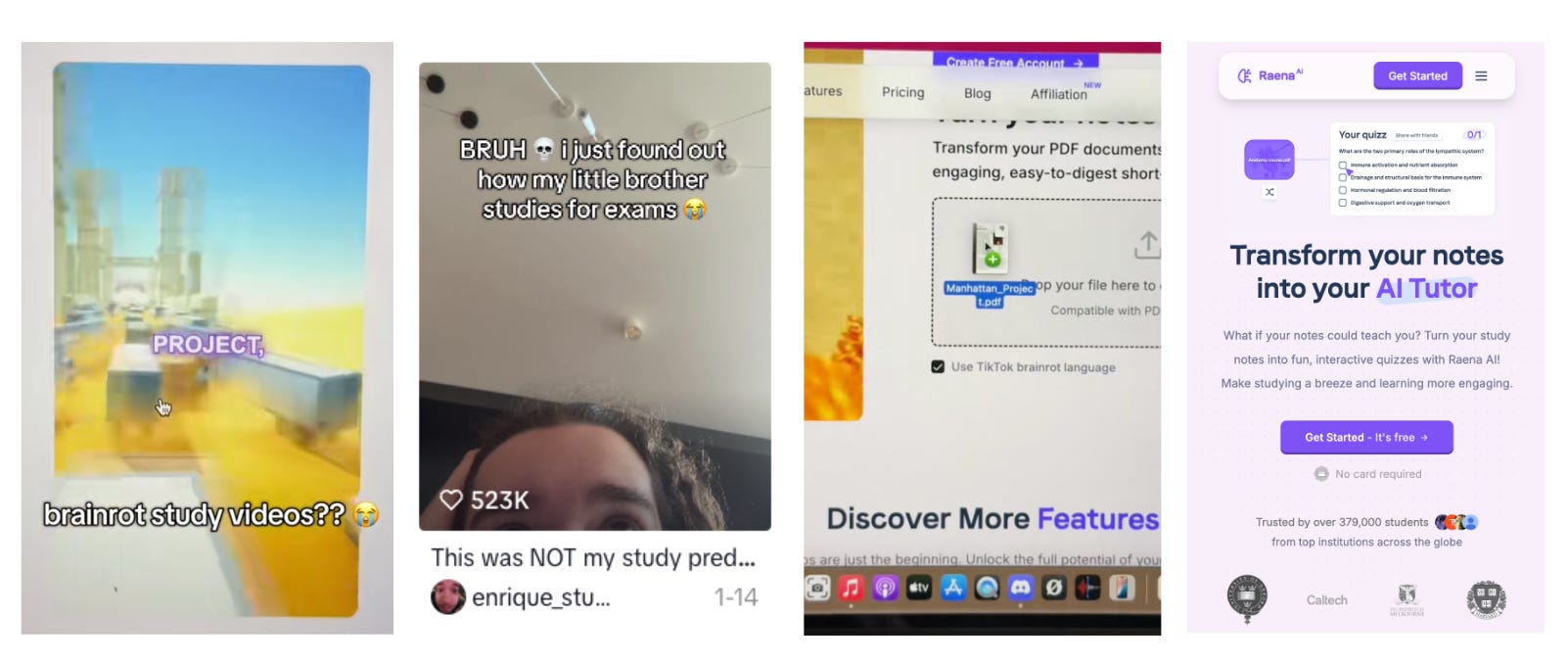
What’s Going On?
A new (alleged) study trend has emerged where students reportedly pair their study materials with “brainrot” content – think Subway Surfers gameplay, ASMR clips, oddly satisfying videos – to help them focus.
Dedicated apps like Raena AI make it seamless. But is this yet another sign of declining attention spans, or simply a new learning style? (For what it’s worth, my Gen Z / Alpha consultant thinks the posts are pure ragebait: “No one I know studies like this.”)
What’s Driving It?
Of course traditional study materials often feel unstimulating compared to the fast-paced digital landscape.
Instead of fighting distraction, these videos embrace it – embedding educational content within the kind of media that appeals to younger cohorts.
What Does It Mean?
The discussion ties into the broader brainrot discourse – is it proof of declining intelligence or just a new way of communicating? (And remember that older generations have always complained the younger ones are getting stupider.)
But on a deeper level, it’s about the state of learning and education. Entertaining content improves knowledge retention by 40-60%, so why shouldn’t we use fragmented, dopamine-driven engagement to reinforce knowledge? Instead of dismissing hyper-stimulating study videos as a distraction, think: how do we design education to incorporate what works about them?
And there’s a bigger point that’s easily missed: all of this is happening outside the classroom – AI is enabling independent learning in ways that shake the foundations of what traditional schooling is about. The future of Vulcan learning pods isn’t far off.
One Final Takeaway
As it’s easier than ever to make learning an AI-assisted hyperpersonalized 1:1 process, what’s being lost? What happens to the shared experiences, debates, and critical thinking skills that come from traditional education? If the focus of learning shifts entirely to individual efficiency, what happens to collaboration, creativity, and the social aspects of learning?