
Creation Generation?
Gen Alpha isn’t delulu for aspiring to be influencers over doctors – they’re reacting to the signals around them.

What’s Going On?
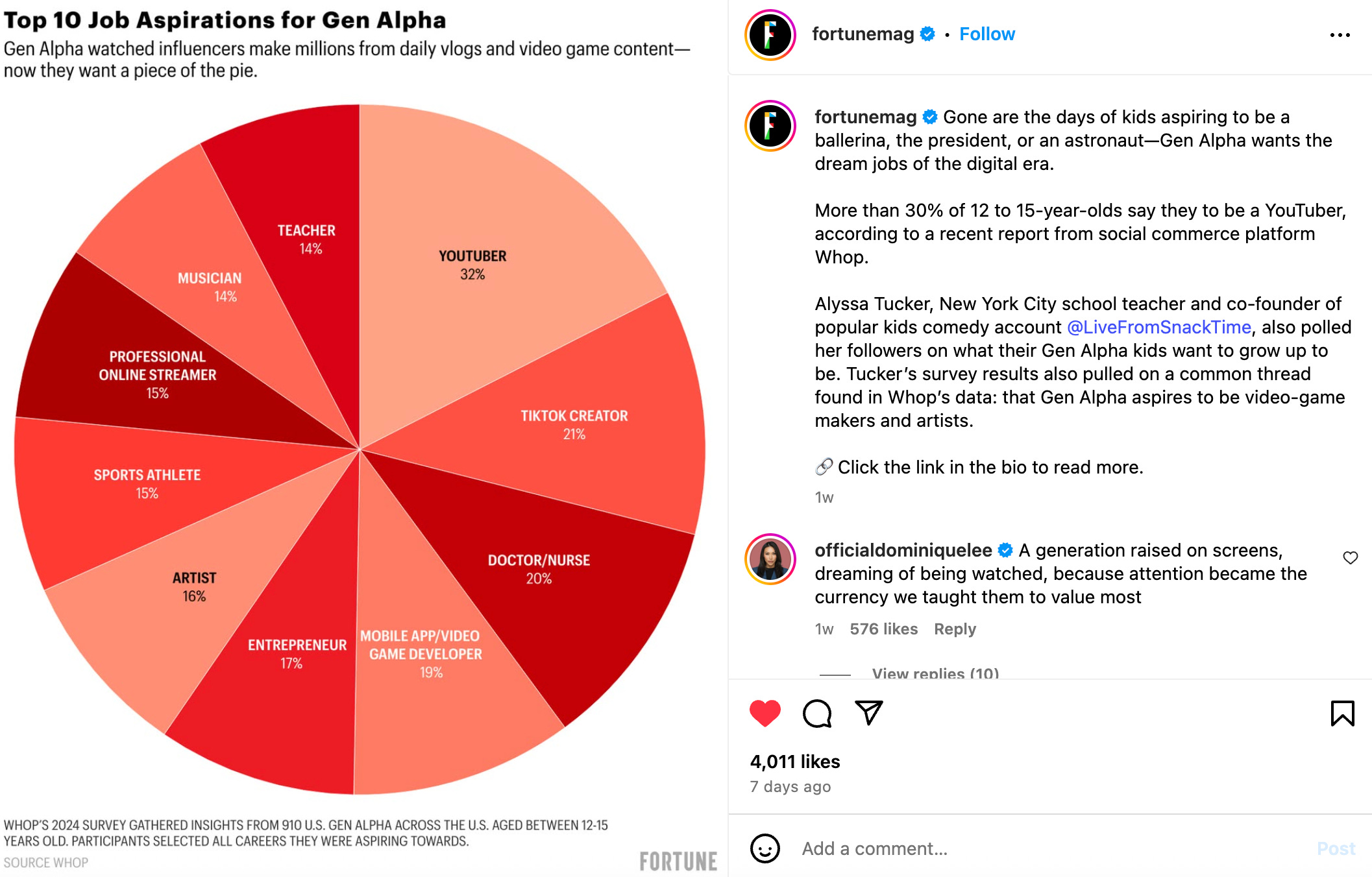
Fortune published the top 10 job aspirations for Gen Alpha last week – and it’s not exactly stethoscopes and gavels. YouTuber (32%) is the #1 dream job, followed by TikTok creator (21%) (though bold to assume either platform will be around for that much longer) – then it’s doctor / nurse, game developer, and “entrepreneur.” Traditional careers like teaching are still on the list, but it’s clear: all kids want to be content creators.
What’s Driving It?
On the surface (and judging from the discourse), it’s the latest symptom of the decline in intellectual curiousity and critical thinking.
But it’s a new world, same humans thing: in the 90s, kids were just as drawn to fame as pop stars, pro athletes, and actors were the top ambitions (derided as “fantasy career aspirations” by a contemporary academic study). What’s changed is the perceived accessibility – and, of course, the enabling tech. Platforms like TikTok and YouTube make stardom feel an iPhone away. I’ve written before about creator economics: Bop House creator Sophie Rain (Devout Christian : OnlyFans Creator :: Madonna : Whore) claims to earn $4m a month. So in a context of job market doom and gloom, the idea of no boss, no student debt, just a ring light and a clever ideas seems less a risk than just reading the room. But behind the scenes, it’s a different story: intense competition, algorithm burnout, the constant pressure to be “on.” (Plus the darker overlaps between creator culture and commodification – again see the Bop House takedown.)
What Does It Mean?
We’re overdue for more honest conversations about what “dream jobs” really entail. Kids aren’t naïve for wanting influence – they’re just paying attention to what’s earning people money. But we owe them transparency – showcasing a wider range of careers, and deglamorizing content creator life.
But also: brands can play a responsible role in speaking to dreams of stardom. Take Samsung Galaxy Superstar which was released in 2022: built on the insight that being an influencer is a key Gen Z aspiration (yes, them too) – but they didn’t have safe ways to explore that. So Samsung gave them one on Roblox, with custom stages, outfit drops, and a metaverse Charli XCX concert. It let kids experience have fun (creativity, self-expression, community) but didn’t glamorize influencing as a career – they could explore the fantasy while keeping one foot in reality.*
Final Takeaway
The solution isn’t to shame Gen Alpha for their star-studded ambitions – it’s to expand their horizons. Help them see options that don’t rely on becoming a Baddie, On Point or not (because honestly: do you think anyone’s going to buy your feet pics when they can just AI-generate them?). Attention may be currency, but value comes from knowing your worth beyond it.
*Disagree? Fight me in the comments.