
Snail Mail Fail?
It turns out that the concept of getting thoughtful creative treats every month without ever having to reciprocate isn't as sustainable as some people might hope.

What’s going on?
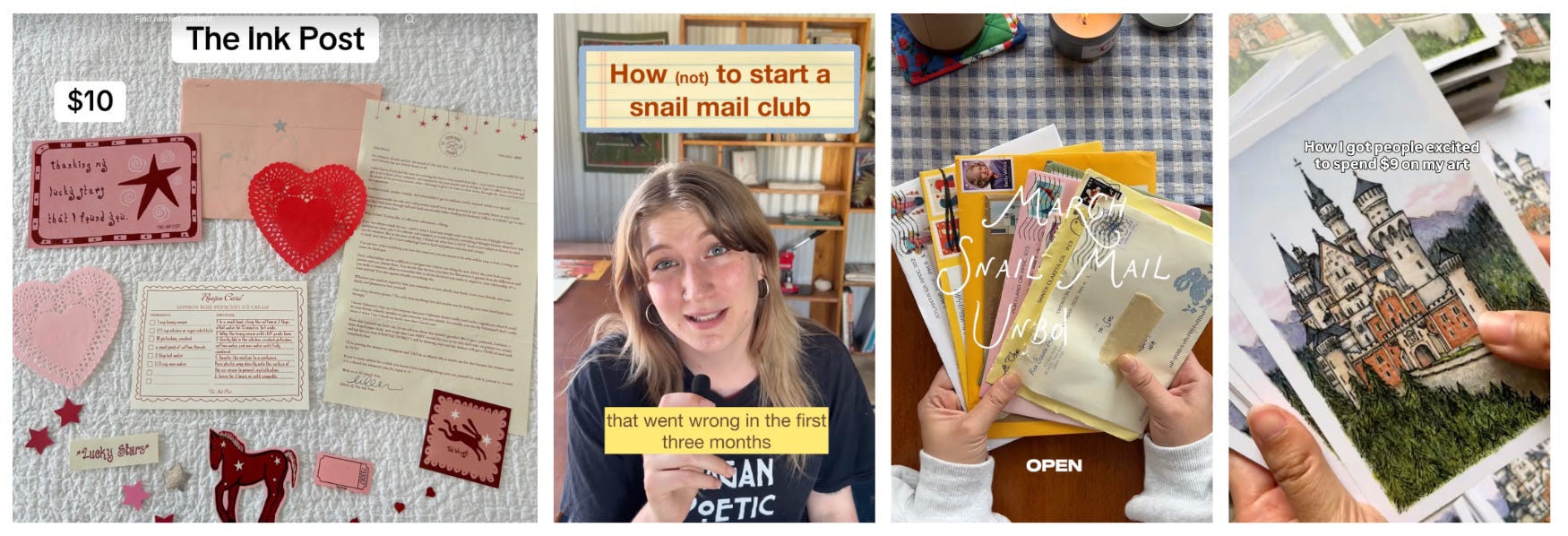
“Gen Z artists have cracked the code for consistent pay, thanks to their generation’s love for snail mail.”
“As many of us yearn for more ‘analogue’ ways of living, slower, more intentional modes of communication are coming back into fashion.”
Publications like Business Insider and Dazed are full of acclaim for Snail Mail Clubs: basically a service where artists send physical mail – prints, letters, postcards, stickers – to their community once a month (for a set subscription free).
But, predictably, the reality isn’t quite so simple.
What’s driving it?
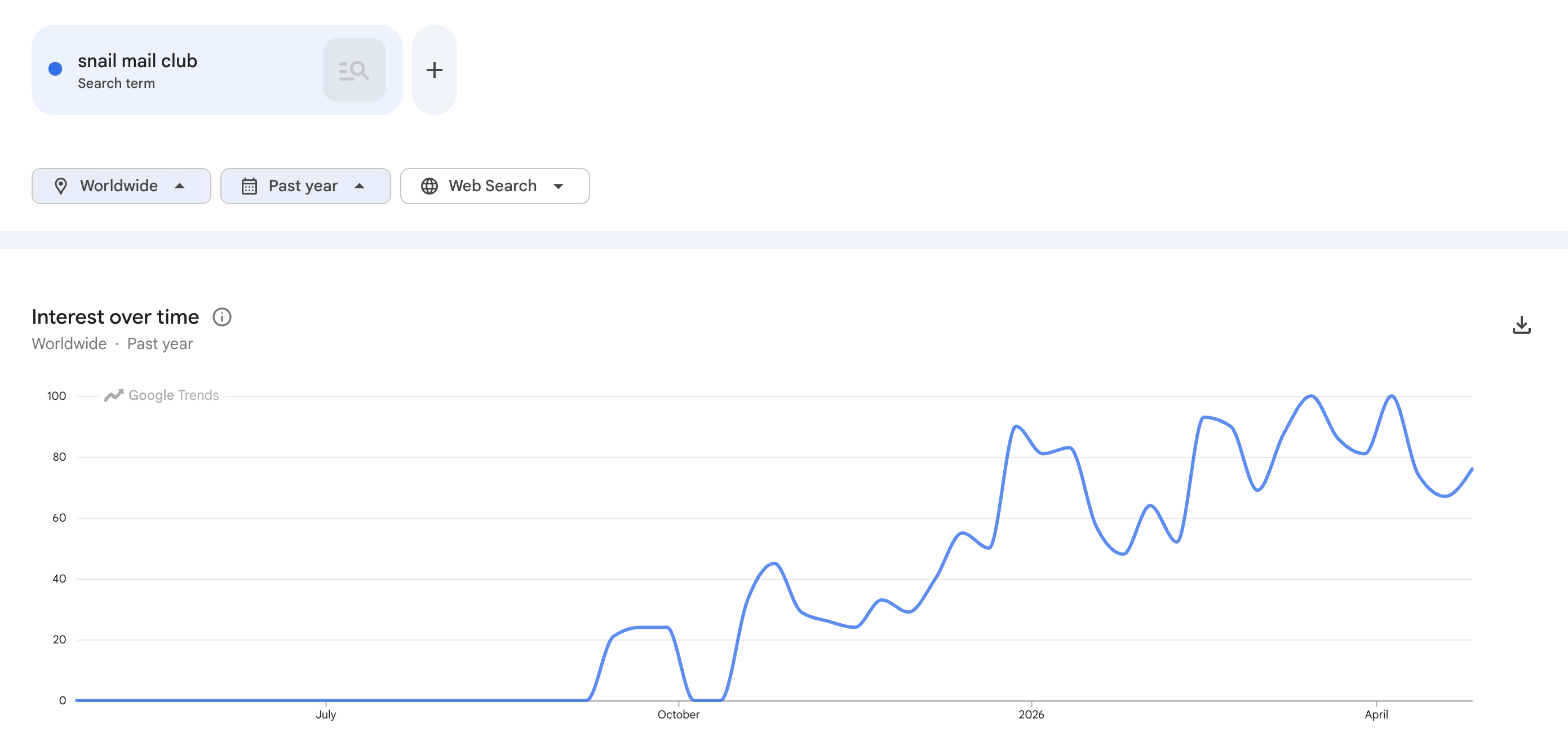
The term “Snail Mail Club” wasn’t actually a thing until last September.
But its ancestors definitely include mail-order clubs for books or records and fan clubs, with remnants of pen pal culture mixed in (and magazine subscriptions).
As to why it started taking off in later 2025: with the creative industries being uniquely unstable, artists are joining online hustle culture by building subscription model.
And the demand side also makes sense: snail mail club subscriptions feel more meaningful than digital ones like Spotify or Netflix – because you actually get to keep the output.
And yet: artists are starting to talk about why they’re discontinuing. Shikani explains the challenges and Martina talked about how her own snail mail club proved inherently sustainable:
“A mail club is 20% design and creativity, 80% physical labour. People joined without knowledge of me… They bought a product, a service – not the community that came with it.”
What does it mean?
In theory, Snail Mail Clubs speak exactly to what people say they want: slower communication leading to more meaningful connection. But rather than taking on labor themselves and, for example, creating a card for someone they love, they consume this faux inticmacy at scale – some recipients subscribe to a whole range of snail mail clubs.
But scale is also the problem: to make it work commercially, the work has to be repeatable (and automated where possible).
Final takeaway
Snail Mail Clubs are appealing because they feel like a more human alternative to digital feeds. But, as often, if something seems too good to be true, it likely is: Snail Mail Clubs sound great on paper (heh), but they actually that turning desire for intimacy into a product available for subscription isn’t feasible for the long run.